
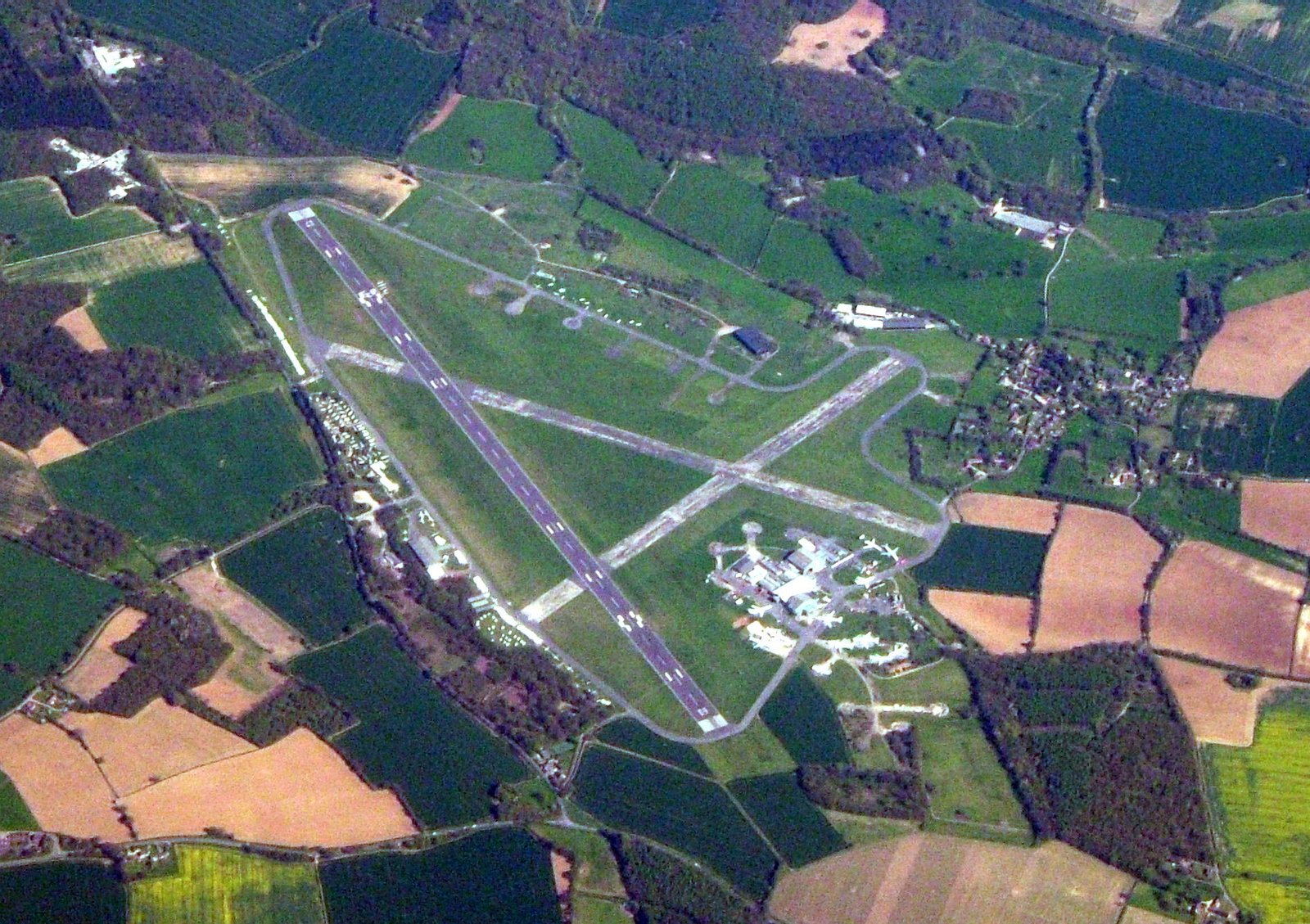
Lasham, Hampshire
The History of Lasham
The village and airfield nowadays commonly bear the name “Lash-am,” although until recently, the local populace predominantly referred to it as “Lass-ham.” The origins of the village trace back to the 11th century when it was initially termed “Esseham,” evolving into “Lessham” shortly thereafter.
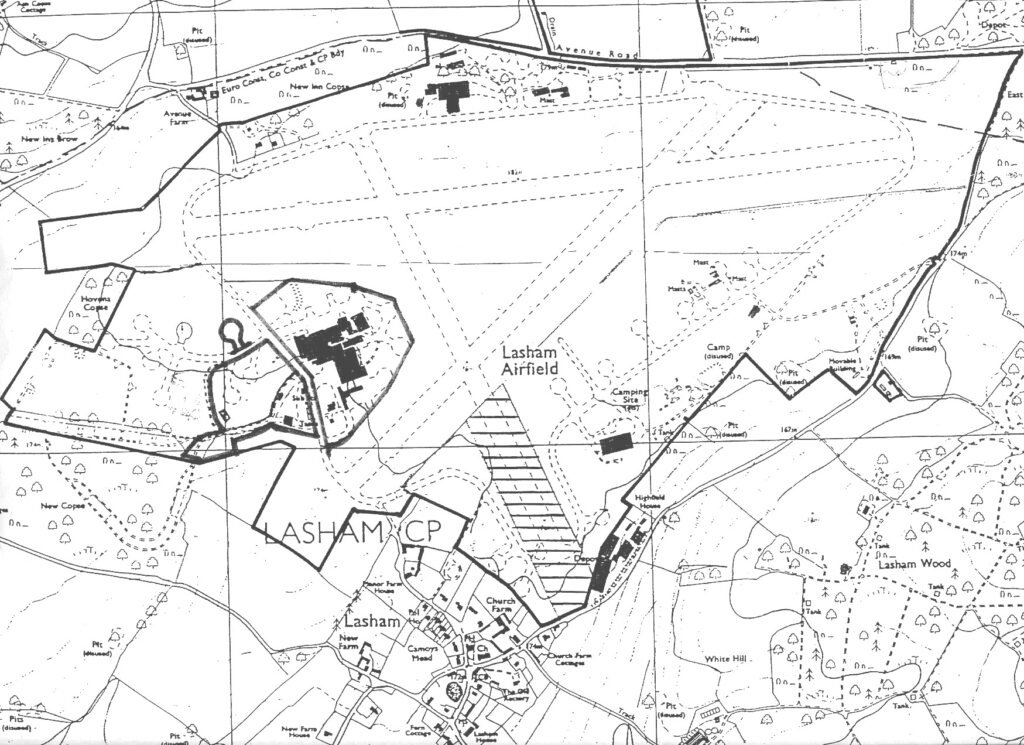
Built in 1942
Lasham Airfield
The airfield’s construction was undertaken by Irish laborers and Italian prisoners of war. This development led to the removal of a significant portion of the beech tree avenue, planted in 1809 by George Purefoy Jervoise of Herriard Park, intended to commemorate the Jubilee of George III in 1810. Capturing the scene, Thomas Hennell created a painting of The Avenue, which constitutes one of around 1500 artworks produced by numerous artists in the early stages of the war as part of the Recording Britain project, sponsored by the Pilgrim Trust. Currently, this painting of the avenue finds its home in the Victoria & Albert Museum.
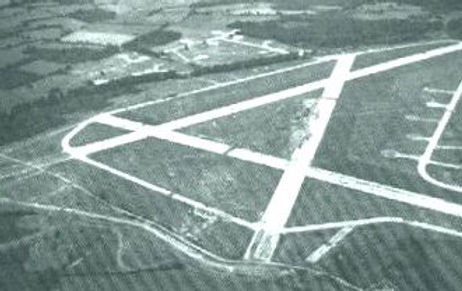
1942 – 1944
Squadrons at Lasham
The construction of the airfield concluded in 1942, and it hosted a variety of aircraft types during World War Two. Among the squadrons stationed at Lasham between 1942 and 1944 were:
33
Squadron
Equipped with Spitfires.
107
Squadron
Operated Boston and Mosquito aircraft.
175
Squadron
Flew Hurricane and Typhoon aircraft.
181
Squadron
Operated Typhoon aircraft.
182
Squadron
Also operated Typhoon aircraft.
183
Squadron
Operated Typhoon aircraft, known as “Gold Coast.”
239
Squadron
Equipped with Mustang aircraft.
305
Squadron
Operated Mitchell and Mosquito aircraft under the PAF designation.
320
Squadron
Operated Mitchell RDNA aircraft.
412
Squadron
Equipped with Spitfires, from the Royal Canadian Air Force (RCAF).
453
Squadron
Operated Spitfires.
602
Squadron
Operated Spitfires, known as “City of Glasgow.”
609
Squadron
Equipped with Typhoon aircraft, known as “West Riding.”
613
Squadron
Operated Tiger Moth and Mosquito aircraft, known as “City of Manchester.”
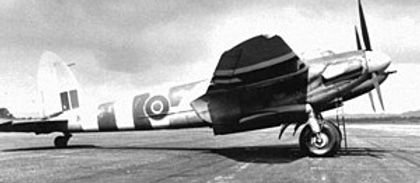
14 April 1944
Squadron 613
One of the notable and widely recognized missions was carried out by 613 Squadron. On April 14, 1944, Wing Commander Bateson led a group of six Mosquito aircraft in a daring operation to bomb the Central Records Registry of the Gestapo in The Hague. Flying at an extremely low altitude of 50 feet, the precision of the attack resulted in minimal collateral damage to nearby civilian areas.
See your vision come to life!
Our team is ready to assist you every step of the way.